



August 25, 2026
Is Hardwood Flooring Good for Kitchens
- Can You Put Hardwood Flooring in a Kitchen?
- What Is the Best Type of Hardwood Flooring for a Kitchen?
- What Is the Best Finish for Hardwood Floors in a Kitchen?
- How Should a Subfloor Be Prepared for Hardwood Flooring in a Kitchen?
- Why Hire a Professional for Kitchen Hardwood Floor Installation?
- How Do You Maintain and Refinish Hardwood Floors in a Kitchen?
The heart of the home has evolved dramatically over the last few decades. Gone are the days when kitchens were strictly utilitarian spaces separated from the rest of the house by swinging doors and starkly different floor materials. With the massive rise of open-concept living, homeowners naturally want a seamless visual flow from their living room right through to their kitchen island. This desire brings us to one of the most heavily debated topics in the interior design and home improvement world. Is putting real timber in a cooking space a recipe for an expensive disaster, or is it a brilliant and timeless design choice?
As a professional in the flooring industry, I hear this exact question almost daily. The short answer is yes, you can absolutely put hardwood in a kitchen. The long answer, however, involves understanding the complex physics of wood, the realities of daily kitchen accidents, and the critical importance of proper protective finishes. If you are designing your dream home or remodeling an older property, you need to weigh the incredible aesthetics against the highly specific practical maintenance requirements. In this comprehensive guide, we will explore every single technical detail you need to know about placing wood floors in moisture-prone areas. From picking the absolute right tree species to understanding the underlying subfloor requirements, this article will equip you with the deep insight needed to make the best investment for your home.
The Reality of Wood in the Kitchen versus Modern Synthetic Alternatives
Before diving into deep technical specifications, we must look at the everyday reality of having wood beneath your feet while you cook, clean, and entertain. Hardwood floors offer a level of timeless beauty that synthetic materials constantly try to mimic but rarely achieve with perfect authenticity. The primary advantage is aesthetic continuity. When your dining room, living room, and kitchen share the same continuous floorboards, the entire footprint of your home feels significantly larger, more open, and vastly more cohesive. Wood also provides immense physical warmth. Unlike ceramic or porcelain tile, which can feel freezing cold on bare feet during winter mornings, wood retains a highly comfortable room temperature.
Furthermore, timber is incredibly forgiving on the human body. Standing over a stove for several hours to prepare a large holiday meal on a rigid concrete or stone floor can cause severe joint fatigue and lower back pain. Wood has a natural, microscopic amount of flex that absorbs some of the daily shock of walking and standing. Additionally, homes with continuous hardwood flooring throughout the main level generally see a notably higher return on investment when it comes time to sell the property.
However, the disadvantages are rooted in nature. Wood is a hygroscopic material, meaning it constantly absorbs and releases ambient moisture depending on the immediate environment. Kitchens are hazardous zones for moisture. Dishwashers can leak, refrigerators with ice makers can experience faulty supply lines, and a simple dropped pot of boiling pasta water can send hot liquid seeping into the seams of your floor. Physical damage is another major concern. A dropped heavy cast-iron skillet will dent a wood floor much easier than it would chip a high-quality porcelain tile.
To truly understand the value of wood in a kitchen, you must compare it against the modern synthetic options currently dominating the market. Luxury Vinyl Tile and Luxury Vinyl Plank have taken the industry by storm because they are entirely waterproof. You could flood your kitchen, and the vinyl planks themselves would not warp. However, vinyl lacks the acoustic warmth of real wood, often producing a hollow clicking sound under hard shoes. More importantly, vinyl cannot be refinished. Once the photographic wear layer is heavily scratched, the entire plank must go to a landfill. Microcement is another trendy option for ultra-modern kitchens, providing a seamless industrial aesthetic. Yet, it is rigidly inflexible and highly prone to hairline cracks if your subfloor shifts even a fraction of an inch. Poured epoxy resins offer unbreakable surfaces but often feel sterile and clinical in a residential setting. Real wood requires more maintenance than these alternatives, but it repays that effort with superior underfoot comfort and the unique, lifelong ability to be repeatedly restored.
Material Science: Solid Wood, Engineered Planks, and Proper Selection
When you decide to proceed with real wood, your next major decision is choosing between solid hardwood and engineered hardwood. This is where technical flooring knowledge becomes absolutely crucial for a successful kitchen environment. Solid hardwood is a single piece of raw timber milled directly into a plank. While it is the traditional choice and can be sanded down numerous times over a century, it is highly reactive to sudden humidity changes. In a kitchen setting where boiling water creates heavy steam and temperatures fluctuate rapidly, solid wood boards will expand and contract significantly, leading to unsightly gaps in the winter and potential cupping in the summer.
Engineered hardwood is a marvel of modern manufacturing and the definitive solution for kitchens. It consists of a top veneer of real, genuine hardwood bonded securely to a core made of multiple layers of high-quality plywood or high-density fiberboard. These underlying layers are stacked in a precise cross-directional pattern. This structural design heavily restricts the wood’s natural tendency to move when exposed to moisture and humidity. It gives you the exact same visual appeal as solid wood because the top layer is identical, but it provides a massive hidden safety net against the environmental swings typical of a cooking space.
Not all trees are created equal, and not all wood species belong in a heavy-traffic zone. The industry relies on the Janka Hardness Scale to determine how resistant a wood species is to denting and wear. For a kitchen, you must avoid softwoods entirely. Pine, fir, and certain types of American cherry are simply too soft to withstand dropped utensils, dragging heavy barstools, and concentrated foot traffic. The absolute gold standards for domestic kitchen flooring are Red Oak, White Oak, Hickory, and Hard Maple. White Oak is particularly favored by experts because it possesses a unique closed cellular structure filled with natural structures called tyloses. Historically used in boat building and wine barrel manufacturing, White Oak is naturally much more resistant to deep water penetration than Red Oak.
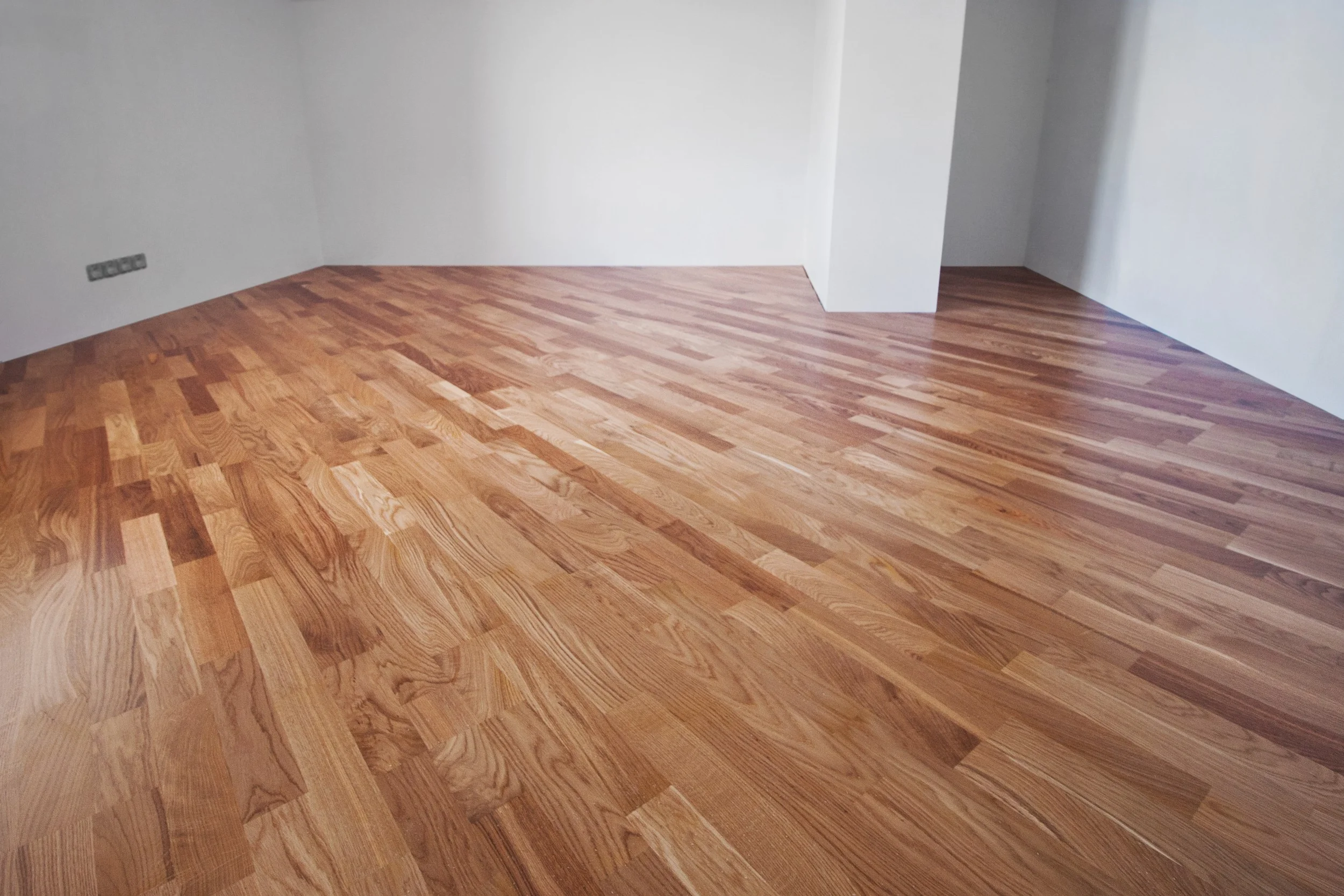
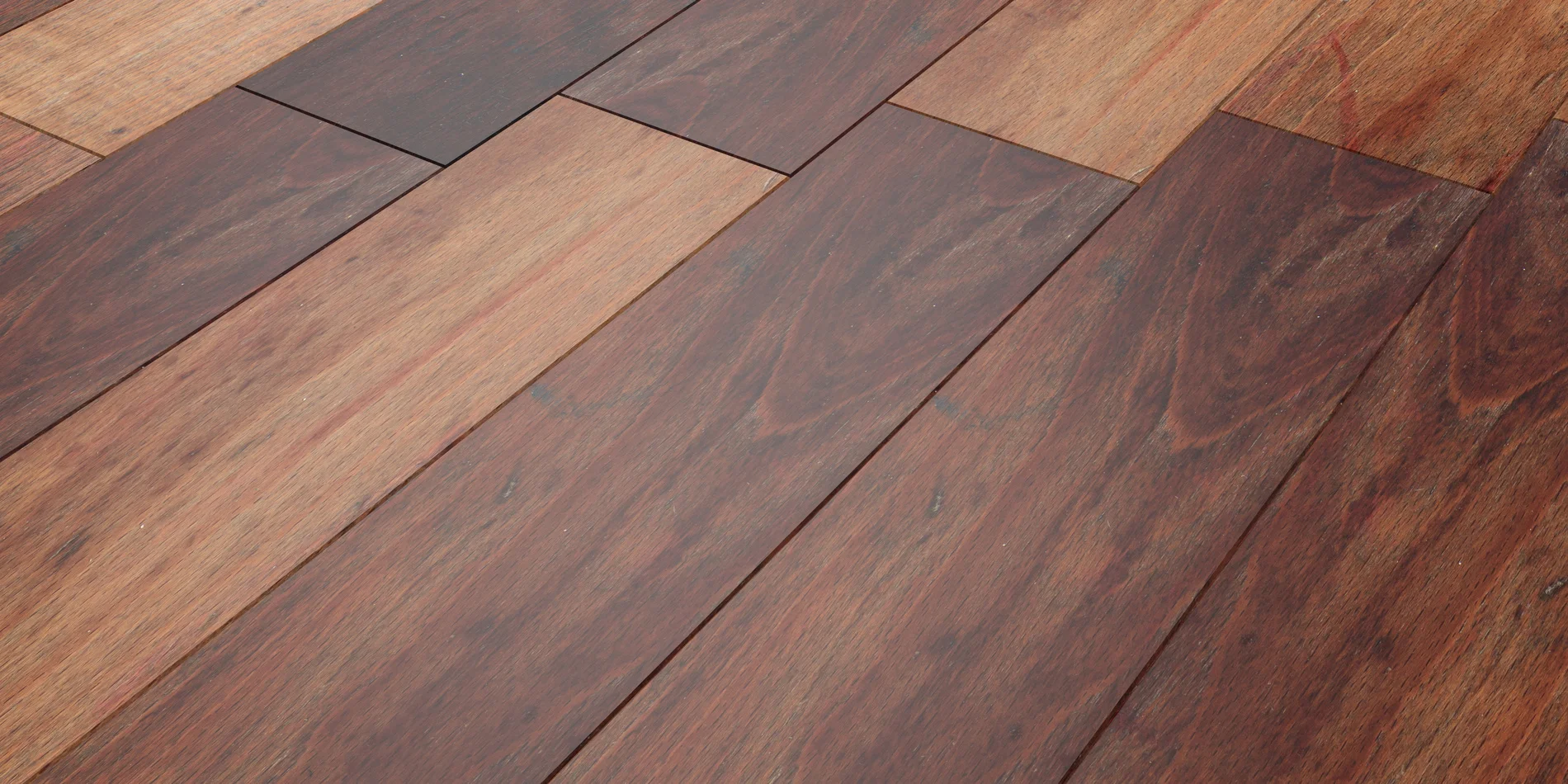
When ordering your selected wood, you must also choose a lumber grade. The grade does not refer to the durability of the wood, but rather its visual appearance and the presence of natural characteristics. Clear Grade and Select Grade are cut from the center of the log, featuring a very uniform color with virtually no knots or mineral streaks. While they provide a sleek and formal appearance, they can be a total nightmare in a busy kitchen because a perfectly uniform floor highlights every single crumb, dust bunny, and tiny scratch. Character Grade, often labeled as Number 1 or Number 2 Common, embraces the natural imperfections of the tree. It is extremely rich with distinct color variations, heavy grain patterns, and beautiful knots. For a high-traffic kitchen, Character Grade is the smartest choice. The busy visual pattern of the wood naturally camouflages everyday dust and minor dents. A dropped pan that leaves a slight depression simply blends in as another rustic detail.
Finish Chemistry and Essential Moisture Management Strategies
The long-term durability of your kitchen floor is entirely dependent on the specific chemistry of its topcoat. You have two main routes for finishing your floors, which are pre-finished factory boards or site-finished boards. Pre-finished boards are stained and coated with incredibly durable aluminum oxide finishes inside a massive factory. These finishes are cured under ultraviolet light and are exceptionally tough. However, pre-finished boards almost always feature a micro-bevel edge. When installed next to each other, these tiny grooved edges create a small valley where spilled water, flour, and everyday kitchen crumbs can easily accumulate.
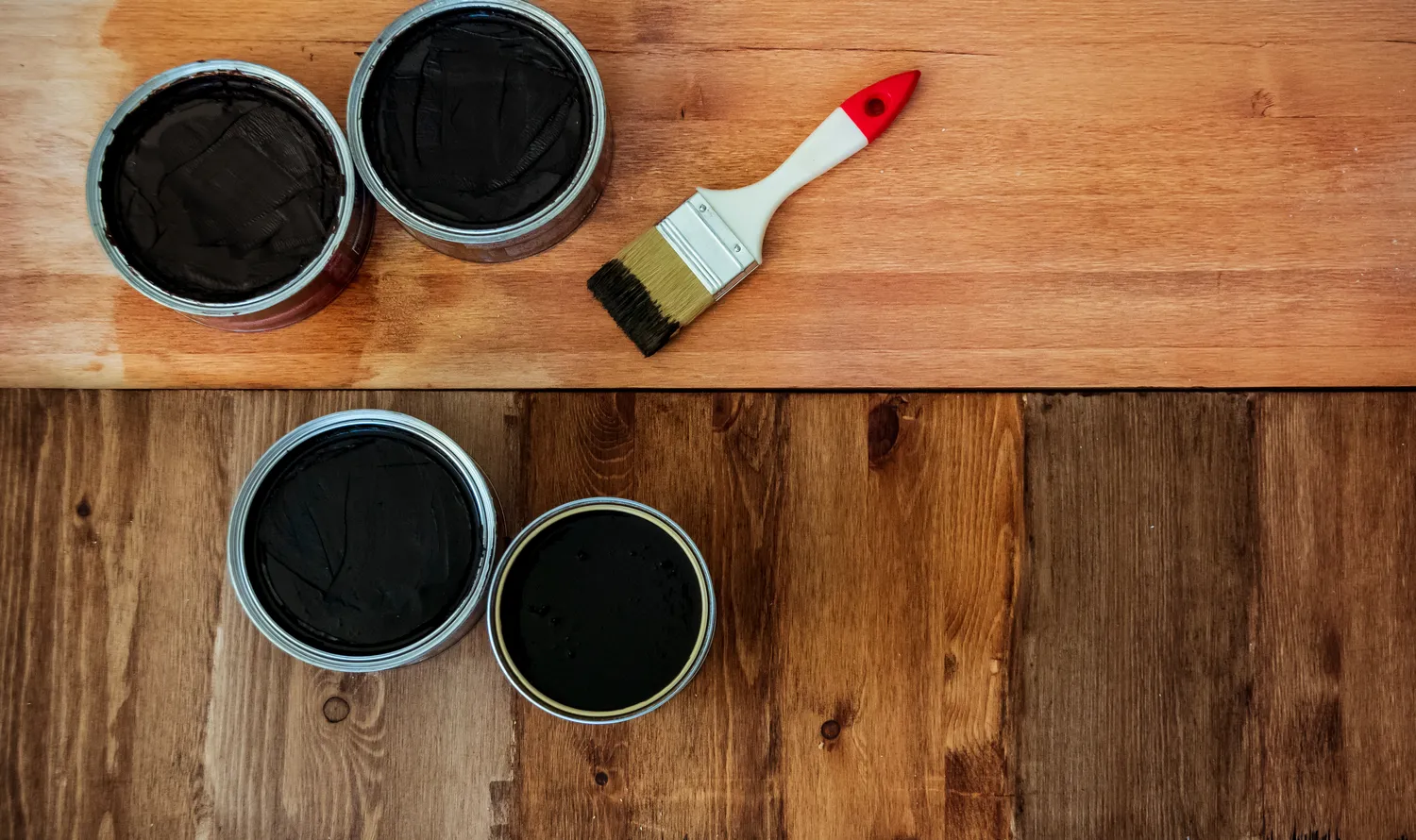
Site-finished floors are installed completely raw, sanded perfectly flat, and then sealed directly inside your home. For a kitchen, site-finishing is heavily recommended by most experts. The liquid polyurethane flows gently over the microscopic gaps between the boards, essentially creating a single, monolithic protective seal across the entire room. This acts as a highly effective barrier, preventing a spilled glass of water from immediately seeping down into the vulnerable joints of the wood.
The industry has evolved far beyond traditional, strong-smelling varnishes. Today, homeowners have access to highly advanced chemical barriers. For high-traffic kitchens, a two-component commercial-grade water-based polyurethane is the strict industry standard. These premium finishes include a separate chemical hardener mixed into the liquid just before application. Once fully cured, they create a tough, plastic-like shell over the wood. Water-based options are incredibly popular because they dry perfectly clear and will never amber or turn yellow over time. They also emit very low Volatile Organic Compounds, meaning you do not have to vacate your house for a week during the curing process. Alternatively, hardwax oils take a completely different approach. These oils penetrate deep into the wood fibers, bonding with them on a molecular level to block moisture from entering. The aesthetic result is a deeply matte, incredibly natural-looking floor where you can actually feel the grain. If a section gets scratched near the kitchen sink, you can simply buff in a little more oil to repair that specific spot, whereas repairing a polyurethane floor usually requires sanding down the entire room.
Living with any type of hardwood in the kitchen requires a slight shift in your daily habits to manage moisture. You do not need to walk on eggshells, but you do need to be proactive. The most important rule is instant spill remediation. If you drop an ice cube, pick it up immediately rather than kicking it under the cabinets to melt. Prolonged standing water is the ultimate enemy of any wood finish. Strategic rug placement is your best friend. Place high-quality, breathable mats in front of the sink and the stove, ensuring the rugs do not have a solid rubber backing that might trap moisture underneath and eventually discolor the floor.
Subfloor Preparation, Renovation Sequencing, and Radiant Heating
A beautiful hardwood floor installed over a highly flawed subfloor is a guaranteed failure. Kitchens require meticulous substrate preparation, especially if they are located on the ground floor directly over a concrete slab. Concrete acts like a rigid sponge, constantly wicking moisture from the earth below. Before any wood is delivered to the site, relative humidity testing must be performed on the slab. If the moisture vapor emission rate is too high, a roll-on moisture barrier must be aggressively applied. These specialized epoxy primers completely seal the concrete, preventing subterranean water vapor from rising up and rotting the engineered wood from underneath.
If your kitchen has a plywood or Oriented Strand Board subfloor, structural integrity is the absolute primary focus. The subfloor must be screwed down extremely tight to the wooden joists to eliminate any squeaks. Additionally, the floor must be perfectly flat. Industry standards typically dictate that the subfloor cannot vary more than three-sixteenths of an inch over a ten-foot radius. If the subfloor dips, the hardwood planks will physically deflect when you walk on them, putting immense mechanical stress on the delicate tongue-and-groove joints and eventually causing them to snap. Self-leveling compounds and careful mechanical sanding are often required before a single board of hardwood is ever laid down.
When undertaking a full kitchen renovation, the precise scheduling of the construction trades is fiercely debated among professionals. Should you install the hardwood floors first and place the heavy base cabinets on top, or install the cabinets first and run the flooring tightly up to the toe kicks? If you are installing a glue-down engineered wood floor, installing the flooring first is generally the preferred method. It creates a continuous, perfectly level surface across the entire room, which makes installing the heavy base cabinets much easier and cleaner. Furthermore, it protects your critical appliance clearances. If you run wood up to the edge of the cabinets and later decide to completely change your kitchen layout, you will be left with gaping, floorless holes. However, if you are using a floating floor installation, the rule changes entirely. Floating floors are not attached to the subfloor with nails or glue. Because they act as a single unanchored sheet, they must be allowed to expand and contract freely. If you place heavy base cabinets topped with dense quartz countertops on top of a floating floor, you effectively pin the floor down. When the humidity changes and the wood tries to expand, the trapped planks will violently buckle and tent upward. For floating systems, cabinets must be installed first.
Kitchens are also prime candidates for underfloor heating systems, especially in colder climates. A common misconception is that real wood and radiant heating are mutually exclusive. You can successfully pair wood floors with radiant heat, provided you follow strict thermodynamic guidelines. Solid hardwood is basically never recommended over radiant heat because direct, fluctuating temperatures cause solid planks to wildly expand and contract. Engineered hardwood is the definitive solution here, as its cross-ply construction provides the dimensional stability necessary to handle gentle, even heating. If you choose to install engineered wood over a heated subfloor, the surface temperature of the wood must never exceed eighty-five degrees Fahrenheit. The system must also be brought up to temperature very gradually over several days to avoid shocking the cellular structure of the timber.
Professional Hardwood Floor Installation and Visual Integration
You might be highly tempted to turn a kitchen flooring upgrade into a weekend do-it-yourself project to save money. Given the extreme complexities of subfloor preparation, moisture barriers, and crucial expansion gaps, this is a terrible idea for a kitchen environment. Proper hardwood floor installation requires highly specialized tools and deep technical knowledge of how the specific lumber product will behave in your exact local climate. An expert will ensure that the subfloor is structurally sound and that massive appliances like double-door refrigerators have enough vertical clearance to be safely removed for servicing once the new floor is laid down.
When you are investing heavily in premium materials, you desperately need premium craftsmanship. If you are searching for a highly rated flooring contractor near me, you must ask them specifically about their direct experience installing real wood in active kitchens. Ask them how they precisely handle expansion transitions to adjacent tile, how they manage epoxy moisture barriers over unconditioned crawl spaces, and what specific commercial polyurethane they confidently recommend for high-traffic wet zones. A seasoned professional will gently guide you away from disastrous choices and ensure your expensive manufacturer warranty remains completely intact.
Beyond the physical installation, a professional will help you master the visual integration of the wood into your specific layout. The exact direction in which you run the planks dramatically impacts the optical illusion of the room’s overall size. As a general industry rule, hardwood planks should run parallel to the longest unobstructed wall in the room to visually elongate the space. However, if your kitchen features a highly prominent natural light source, such as a massive wall of sliding glass doors, running the planks perpendicular to the glass will cause the harsh natural light to cast distinct shadows across every single bevel and seam. Running the boards perfectly parallel to the main light source allows the daylight to wash smoothly down the length of the grain, creating a beautifully seamless and glassy appearance.
Additionally, you must consider the acoustic impact of your new floors. Kitchens are naturally loud spaces filled with clinking pots, running water, and humming mechanical appliances. Hardwood floors bounce sound waves much more aggressively than softer synthetic materials. Integrating advanced sound-dampening underlayments directly beneath the wood, combined with strategic fabric window treatments and soft overhead lighting fixtures, will perfectly balance the acoustic profile of the room.
Long-Term Care, Maintenance, and Professional Refinishing
Even with the most meticulous care and the strongest polyurethane finish, a busy kitchen floor will eventually show its age. The truly beautiful aspect of real wood is that it does not need to be violently ripped out and thrown away when it gets scratched. After a decade or two of heavy cooking, entertaining, and daily family life, the protective topcoat will undoubtedly show thousands of micro-scratches, dull traffic patches, and perhaps some minor dents from dropped heavy objects.
At this stage, you do not need an entirely new floor. You just need a professional to systematically sand away the old degraded finish, smooth out the physical imperfections in the raw timber, and apply fresh coats of a high-grade protective sealant. If your kitchen floors start looking tired and you live in an older home, booking a specialized professional service for hardwood floor refinishing in Sleepy Hollow, or wherever your local housing market is located, will completely and utterly revitalize the entire space. During the intense sanding process, you can even elect to completely change the chemical stain color of the wood, giving you an entirely new kitchen aesthetic without the massive financial cost of buying new boards.
Maintaining your floor between these major refinishing jobs is surprisingly simple if you use the right tools. Put away the heavy artillery immediately. Never use a hot steam mop on a hardwood floor. The aggressive, pressurized steam will forcefully inject raw moisture deep into the wood grain, instantly delaminating the finish and permanently warping the veneer. You must also avoid heavy liquid string mopping entirely. Instead, sweep or vacuum the floor regularly using a hard-floor attachment to remove abrasive dirt and grit, which acts exactly like rough sandpaper under your shoes. When a deeper clean is necessary, use a slightly damp microfiber flat mop combined with a highly specific, manufacturer-approved, pH-neutral wood floor cleaner.
Hardwood floors belong in the kitchen just as much as they belong in the formal dining room, provided you enter the commitment completely informed. If you are someone who regularly leaves large standing puddles of water on the floor, or if you simply refuse to wipe up accidental spills immediately, you might honestly be better served by high-end porcelain tile. However, if you are willing to adopt a few very simple daily maintenance habits, absolutely nothing will elevate the luxury, incredible warmth, and cohesive architectural design of your home quite like genuine wood. By choosing a highly stable engineered plank, selecting a hard domestic species like White Oak, opting for a seamless site-finished commercial polyurethane, and relying entirely on expert installation, your kitchen floors will remain a breathtaking focal point for decades to come.